
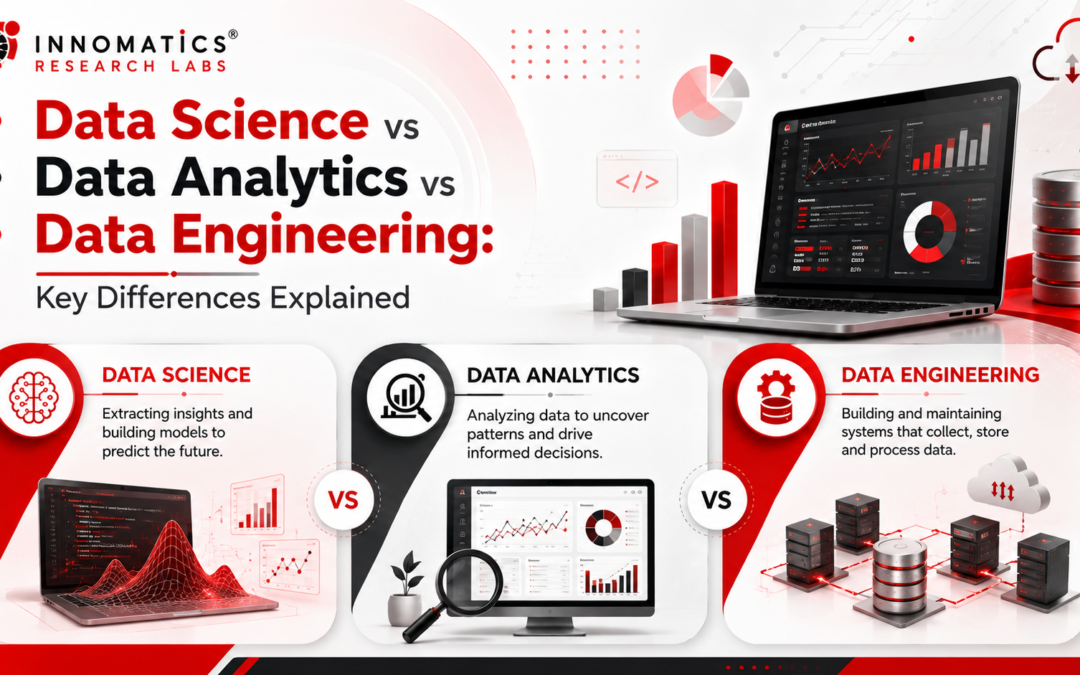
You hear these three words a lot. Data Science. Data Analytics. Data Engineering.
They sound similar. Are they the same thing? Not really.Each one is a different job. Each one needs different skills. Choosing the wrong strategy doesn’t just slow you down, it can waste months of effort.
So let’s clear this up. In simple words. No jargon.
The Short Answer First
Here is the quick version, in case you’re in a hurry:
- Data Analytics looks at data and explains what already happened.
- Data Science uses data to predict what will happen next.
- Data Engineering builds the systems that move and store the data in the first place.
Think of it like a restaurant. The engineer builds the kitchen. The analyst tells you what dishes sold well last month. The scientist predicts what dish will sell best next month.
Now let’s go deeper into each one.
What Does a Data Analyst Actually Do?
A data analyst looks backward. They study numbers that already exist.
Their job is to answer questions like:
- Why did sales drop last quarter?
- Which city has the most customer complaints?
- What time of day do people shop the most?
Tools they use:
- Excel
- SQL
- Power BI or Tableau
Who this suits: People who like patterns. People who enjoy turning messy numbers into a clear story. You don’t need heavy coding here. Build strong SQL skills and attention to detail to become a confident data analyst.
This is often the most accessible starting point for breaking into the data field. Many beginners start here.
What Does a Data Scientist Actually Do?
A data scientist looks forward. They use past data to guess what happens next.
Their job is to answer questions like:
- Will this customer leave us next month?
- Which product will sell out first?
- Is this transaction fraud?
Tools they use:
- Python
- Machine learning libraries
- Statistics and probability
Who this suits: People who enjoy working with numbers, logic, and problem-solving. People who enjoy building models, not just reading them. This role usually needs more technical depth than analytics. You’ll write code daily.
This role gets more attention online. But it’s not the only path — and it’s not always the best starting point for everyone.
What Does a Data Engineer Actually Do?
A data engineer works behind the scenes. Nobody sees their work directly. But without them, nothing else works.
Their job is to answer questions like:
- How do we collect data from ten different sources?
- What Does It Take to Store Billions of Rows of Data?
- How do we ensure the data pipeline never fails?
Tools they use:
- Databases like MySQL or MongoDB
- Cloud platforms like AWS or Azure
- Data pipeline tools
Who this suits: People who like building systems. People who value structure over storytelling. This role leans closer to software engineering than to analysis.
This is the least talked-about role. But companies need it just as much as the other two. Maybe more.
Side-by-Side Comparison
Data Analytics | Data Science | Data Engineering | |
Core Focus | Explaining the past | Predicting the future | Building data systems |
Key Tools | Excel, SQL, Power BI | Python, ML, statistics | SQL, cloud, pipelines |
Best For | Beginners, detail-lovers | Math and logic lovers | System builders |
Coding Needed | Basic | Heavy | Heavy |
Common Job Titles | Data Analyst, BI Analyst | Data Scientist, ML Engineer | Data Engineer, Big Data Engineer |
Which One Should You Choose?
There’s no single right answer. It depends on you.
Pick Data Analytics if: You’re new to the field. You want to start working sooner. You enjoy Excel and dashboards more than code.
Pick Data Science if: You like math. You’re okay writing code every day. You’re interested in building models that forecast what happens next.
Pick Data Engineering if: You like solving system-level problems. You enjoy working with databases and infrastructure more than charts.
Here’s something worth knowing: many people don’t stay confined to just one role. A lot of data analysts later grow into data science roles. Many of the skills overlap and build on one another.
If you’re leaning toward the data science path, our Data Science course in Pune covers the full journey — starting from analytics basics and moving into machine learning and GenAI, so you’re not locked into one narrow skill set.
Final Thought
These three roles don’t compete with each other, they complement one another. They work together.
The engineer builds the road. The Data Analyst helps you understand what’s happening right now.The scientist predicts the traffic before it happens.
Pick the one that matches how you think, not just the one that sounds impressive on LinkedIn.
Confused about which data career to choose? Get expert guidance. Speak with our team to choose the course that fits your goals.
Frequently Asked Questions (FAQs)
Is data analytics part of data science?
In a way, yes. Data Analytics is often the starting point for many data careers. Many data scientists started out as analysts before learning machine learning and advanced statistics.
Do data engineers need machine learning skills?
Not usually. Data engineers focus on building and maintaining systems that store and move data. Machine learning is more the data scientist’s job, though the two roles often work closely together.
What's the Best Starting Point: Data Analytics or Data Science ?
Data Analytics is often the easiest starting point for a career in data. It needs less coding and fewer math concepts upfront. Data Science has a steeper learning curve, since it requires Python, statistics, and machine learning together.
What does a typical career progression across these three roles look like?
A common path is: start as a data analyst, build strong SQL and business sense, then move into data science once you’re comfortable with Python and statistics. Data engineering is more of a separate track, closer to software development.